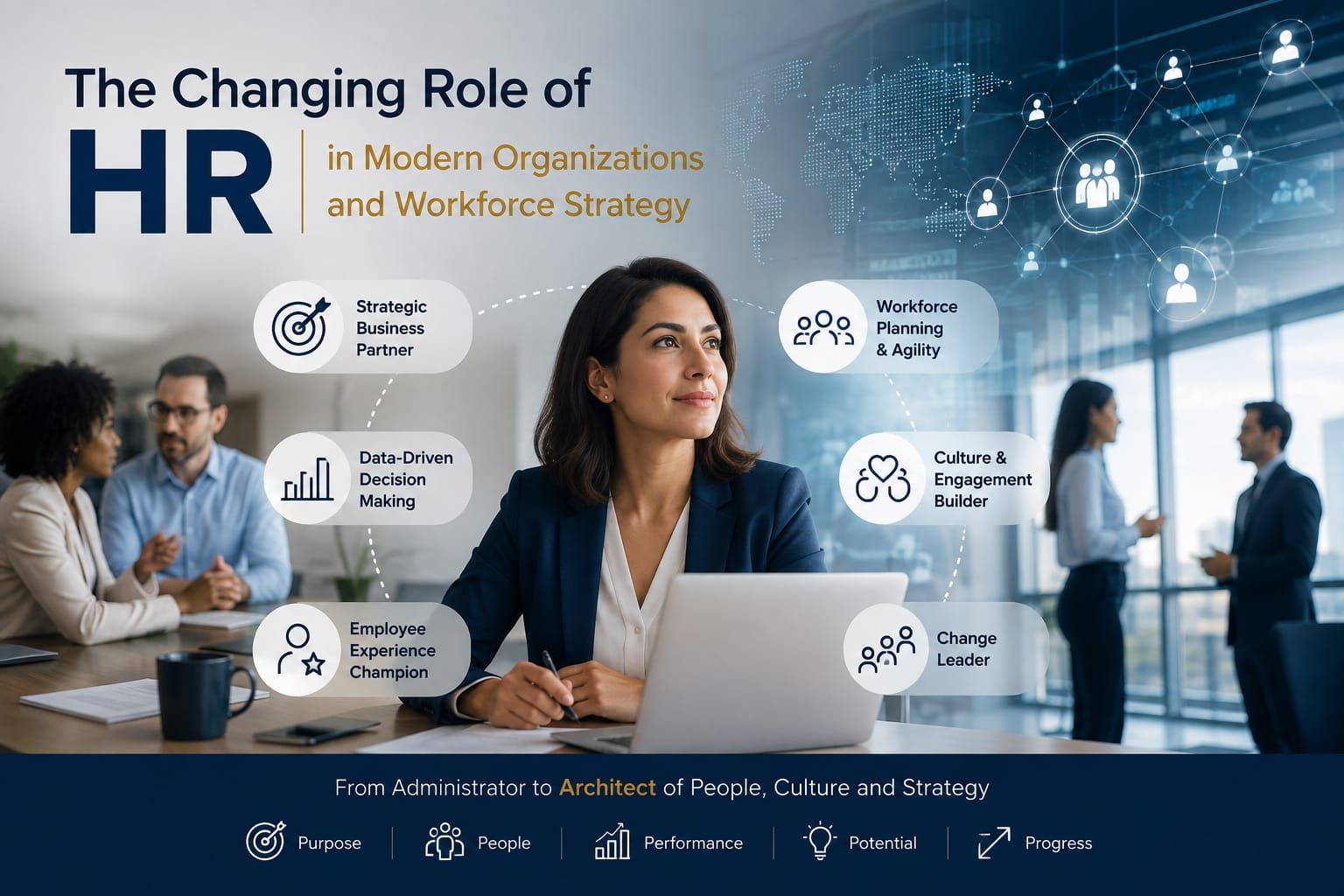
Changing role of HR
The changing role of HR has redefined how companies approach talent, organizational growth, and workplace culture. While human resources was historically viewed as a department dedicated strictly to administrative protocols, contracts, and manual paperwork, today’s leaders recognize it as a core driver of institutional success. In an evolving economic landscape marked by rapid technological adoption and changing employee expectations, HR professionals are steering organizational health from the frontline.
Índice de Conteúdo
The Evolution of Human Resources Management
For decades, human resources focused largely on standard personnel administration: drafting company handbooks, tracking attendance, administering standard benefits packages, and resolving transactional workplace disputes. While these operational tasks remain fundamental, modern businesses demand far more strategic insight.
Today, the scope of human resource management has broadened significantly. Professionals in the field are responsible for aligning talent development directly with high-level corporate goals. They design long-term workforce plans, evaluate organizational capabilities, and ensure that teams possess the resources and guidance necessary to thrive in competitive markets.
Driving Workplace Culture and Employee Engagement
One of the clearest reflections of the changing role of HR is the heightened focus on workplace culture. Companies now understand that operational efficiency cannot exist in isolation from employee satisfaction. Modern HR leaders design inclusive, transparent, and empathetic work environments that encourage collaboration.
Strengthening employee engagement has become a primary metric of success. Through continuous feedback loops, structured recognition systems, and leadership coaching, HR teams help mitigate burnout and foster authentic loyalty. When staff members feel valued and supported in their daily tasks, overall performance, creativity, and retention increase naturally.
Talent Retention and Bridging Critical Skill Gaps
In a volatile employment landscape, retaining skilled talent is an ongoing challenge. The changing role of HR requires teams to become proactive rather than reactive, predicting workforce shortages and implementing tailored training initiatives before skill gaps widen.
- Continuous Learning and Upskilling: Creating mentorship pipelines, leadership workshops, and technical training programs.
- Strategic Onboarding: Structuring comprehensive integration pathways that acclimatize new hires swiftly and effectively.
- Customized Career Paths: Outlining clear progression opportunities to keep ambitious workers committed to the organization over the long term.
Emphasizing Health, Well-Being, and Support Systems
Modern organizations increasingly recognize that sustainable productivity requires a strong commitment to holistic employee well-being. A forward-thinking HR department does not wait for workplace exhaustion or operational friction to surface before taking action. Instead, human resource specialists actively advocate for comprehensive corporate wellness initiatives, mental health support frameworks, and robust occupational health programs.
Prioritizing worker health safeguards institutional resilience. When leadership invests in preventive wellness strategies and provides accessible support channels, absenteeism declines, team morale rises, and organizations build a foundation capable of enduring market pressures.
Partnering for a Healthier and Stronger Workforce
Prioritizing employee mental health has become one of the most critical responsibilities for HR leaders today — especially in hospitals, clinics, and healthcare networks, where the daily routine already demands intense emotional resilience. Long shifts, pressure for clinical results, and a shortage of qualified professionals accelerate physical and emotional exhaustion among medical and care teams.
When an organization fails to support the people who care for others, burnout takes hold — and the ripple effect is well known: lower productivity, absenteeism, clinical errors, and turnover of key professionals, often the most experienced ones.
This is where assertive recruitment becomes strategic, not just operational. Hiring the right physician or nurse — with the technical, behavioral, and purpose-driven fit for that specific team’s reality — reduces the pressure on those already on the ground, prevents last-minute reallocations, and breaks the vicious cycle of overload that fuels burnout in the first place. Recruiting well isn’t just about filling a position — it’s about protecting the mental health of everyone already inside the organization.
Want to build a healthcare team that thrives, not just survives? Get to know our work.
📩 Follow us on Instagram: @claves.saude
Fonte: Google News